An auto-darkening helmet has to darken to at least OSHA's minimum shade for your process and current, so start with the shade range. Then compare what matters for your work: more arc sensors for out-of-position welding, a larger viewing area for comfort, the optical class the maker states for lens clarity, a low-amp TIG rating if you TIG, and a grind mode if you grind in the helmet.
Shade range first
OSHA's minimum shades (29 CFR 1910.133) set the floor: for example shade 10 for MIG from 60 to 500 amps, shade 8 for stick from 60 to 160 amps, shade 8 for TIG up to 150 amps. A variable 9 to 13 dark range covers most MIG, flux-core and stick work in a home shop; a range reaching down to 5 or 8 helps low-amp TIG and plasma. Fixed-shade auto-darkening helmets are simpler but can't adjust.
OSHA's advice holds with any helmet: start darker than you need and go lighter only until you can see the weld zone, never below the minimum. Our shade chart guide has the full table.
The specs side by side
| Spec | What it tells you | What to look for |
|---|---|---|
| Dark shade range | How dark the lens goes | Reaches OSHA's minimum for your highest current |
| Light state | Shade before the arc strikes | Lower is easier for setting up |
| Arc sensors | How many detectors watch for the arc | Four helps when sensors can be blocked out of position |
| Switching speed | Time to darken, stated in fractions of a second | Compare makers' figures; all modern lenses are fast |
| Viewing area | Lens window size | Larger for comfort and wide joints |
| Optical class | Maker-stated lens clarity rating, often four digits like 1/1/1/2 | Lower numbers mean better clarity; compare as stated |
| Low-amp TIG rating | Lowest current at which the sensors still trigger | Matters for TIG under about 20 amps |
| Power | Solar, battery, or both | Replaceable batteries extend life |
| Grind mode | Light setting for grinding | Saves lifting the helmet between welding and grinding |
What makers in our catalog state
| Helmet | Shade range (maker) | Viewing area (maker) | Optical class (maker) |
|---|---|---|---|
| ARCCAPTAIN HSH-S800 Skeleton Knight Auto-Darkening Welding Helmet | Not stated | Not stated | 1/1/1/1 |
| ARCCAPTAIN LY800F Auto-Darkening Welding Helmet | Not stated | 3.94"x3.66" | 1/1/1/1 |
| ARCCAPTAIN LY800J Auto-Darkening Welding Helmet | Not stated | Not stated | 1/1/1/1 |
| BESTMIG MIG 135A Welding Helmet | Not stated | Not stated | Not stated |
| ESAB A60 Auto-Darkening Welding Helmet | Not stated | Not stated | Not stated |
Standards and side protection
OSHA's eye and face protection rule requires protective devices to comply with ANSI Z87.1, and our helmet pages show the standard a maker states, when it states one. OSHA's welding fact sheet adds that where chips or fragments can fly, glasses with side shields or goggles go under the helmet, and that when filter lenses are worn under the helmet, the combined shade should meet the table.
Respirator helmets
Powered air-purifying respirator (PAPR) helmets add a blower and filter that supply clean air inside the shell. OSHA's fume fact sheet lists respiratory protection as a step where ventilation and work practices don't reduce exposure enough, which makes PAPR helmets worth a look for regular stainless or galvanised work.
A worked example
You MIG weld at 120 to 180 amps and TIG thin stainless at 30 to 60 amps. OSHA's minimums are shade 10 for that MIG and shade 8 for that TIG. A helmet with a 5 to 13 or 8 to 13 range and a stated low-amp TIG rating covers both. Four sensors help when you weld under a trailer where your arm can block a sensor.
Machines in these notes
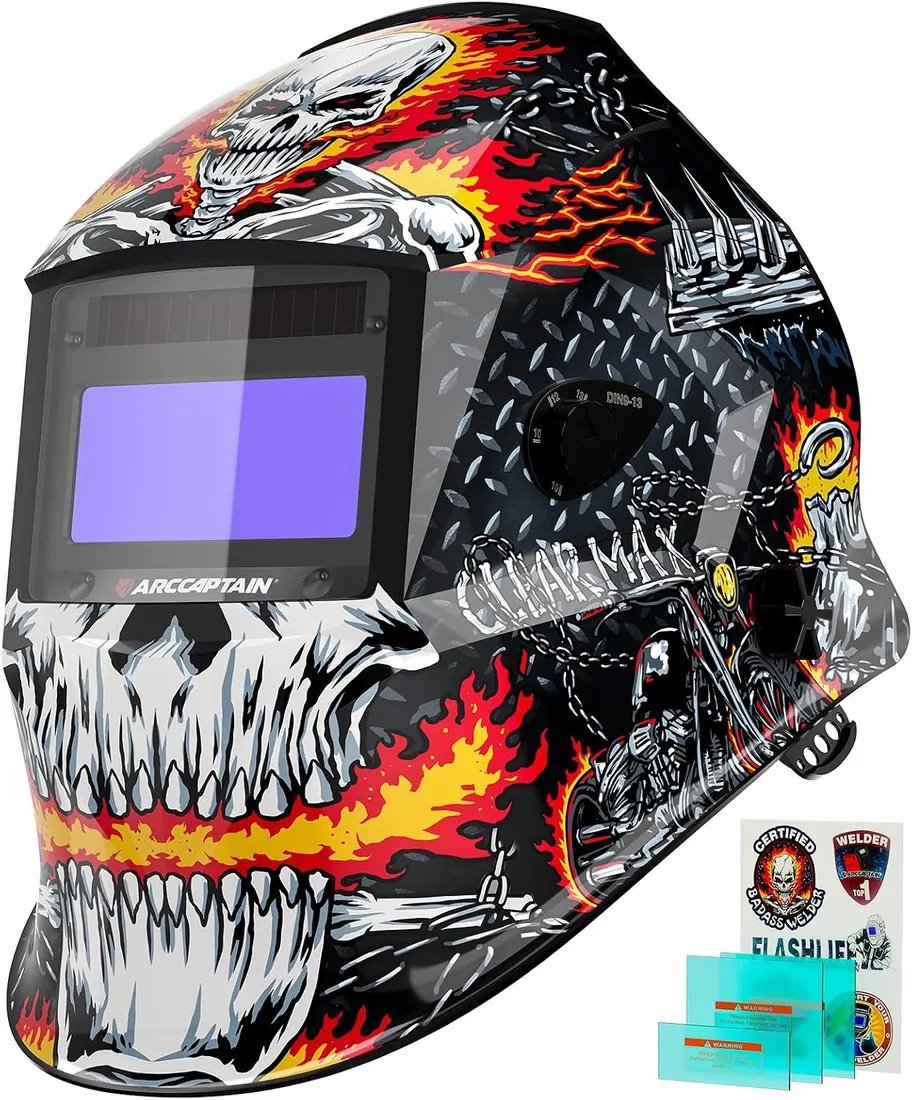
ARCCAPTAIN HSH-S800 Skeleton Knight Auto-Darkening Welding Helmet
1/1/1/1
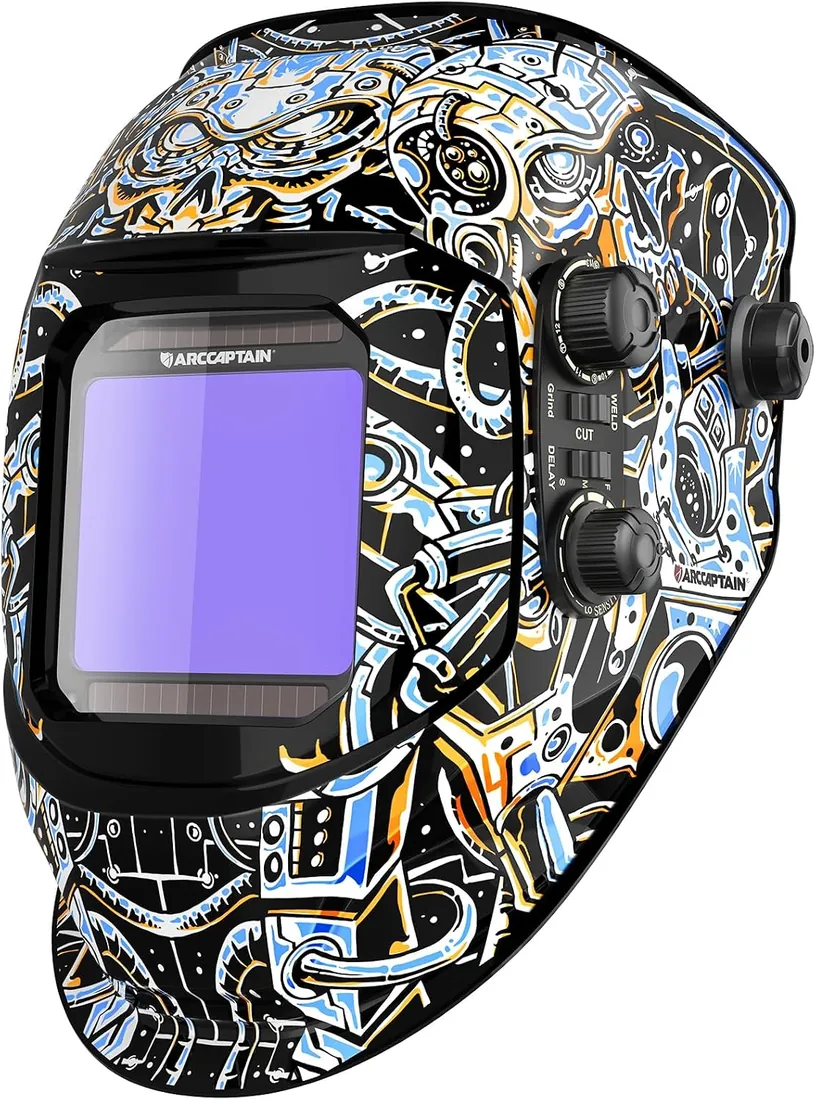
ARCCAPTAIN LY800F Auto-Darkening Welding Helmet
1/1/1/1
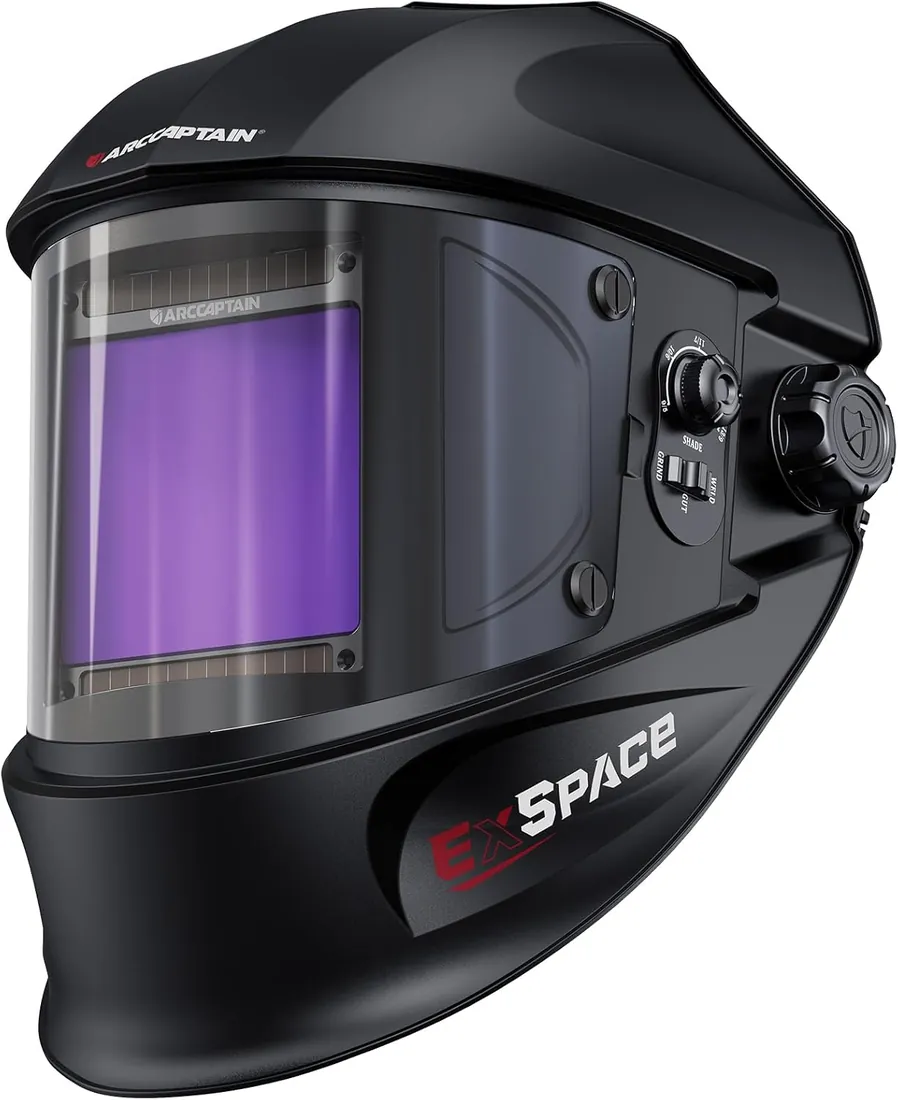
ARCCAPTAIN LY800J Auto-Darkening Welding Helmet
1/1/1/1
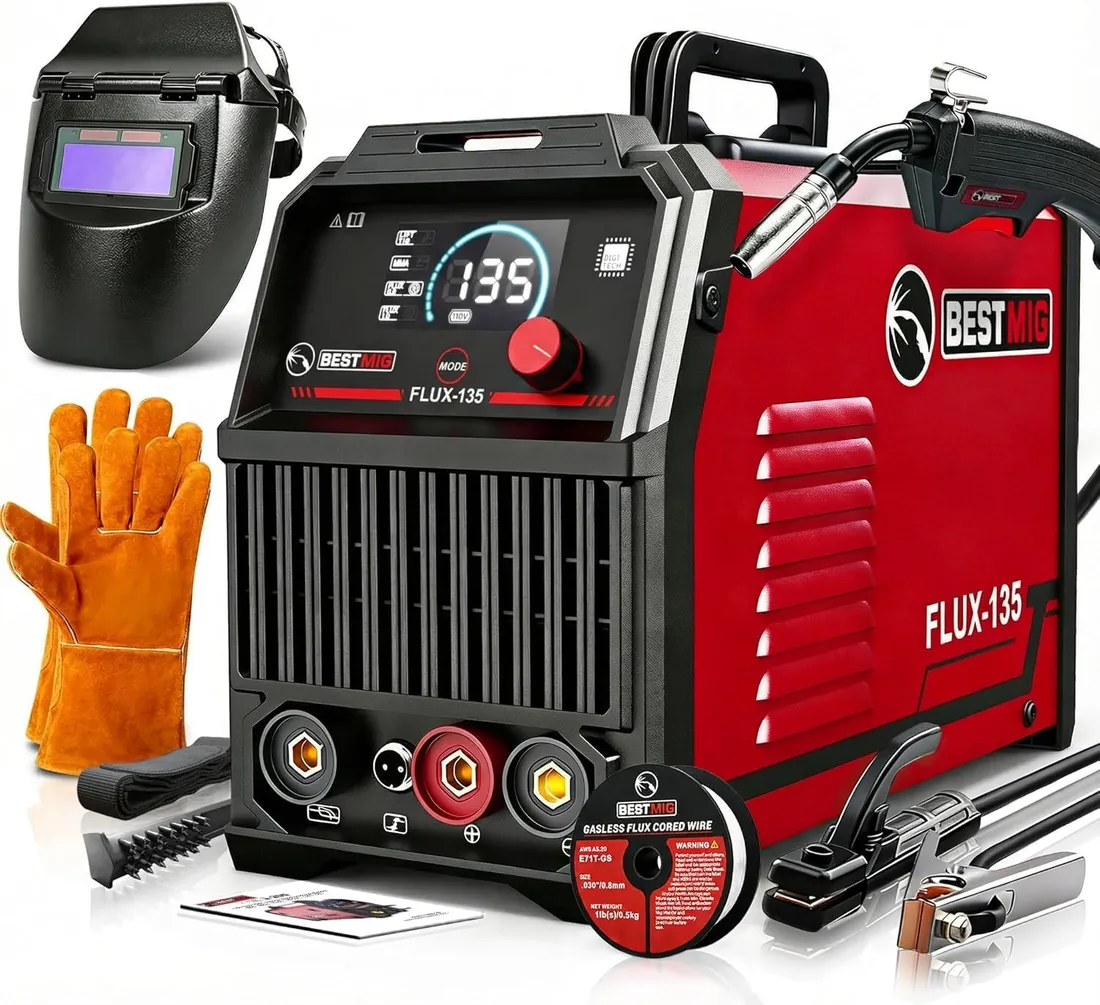
BESTMIG MIG 135A Welding Helmet
Passive