Plasma cutters are rated by thickness, not by a welding amperage rule. Makers state cut capacity in different ways (rated, clean or quality cut, and maximum or severance cut); size to the clean or rated figure for the steel you cut most. The cutter also needs clean, dry compressed air at the flow and pressure its maker states, unless it has a built-in compressor.
How cut capacity is stated
A plasma cutter forces a jet of ionised gas through a small nozzle and melts through metal, blowing the molten metal out of the cut. Its output in amps relates to how thick it can cut, but makers rate cutters by thickness directly. Three terms are common: a rated or recommended thickness the cutter handles at a usable speed, a clean or quality cut with a smooth edge, and a severance or maximum cut that gets through but slowly, with a rough edge.
A listing that says 'cuts up to 1/2 inch' may mean any of these. Our product pages quote the maker's exact wording under 'Cut capacity'. Compare like with like, and buy for the thickness you cut most, not the thickest you'll ever cut.
What makers in our catalog state
| Cutter | Cut capacity (maker) | Output (maker) | Air (maker) |
|---|---|---|---|
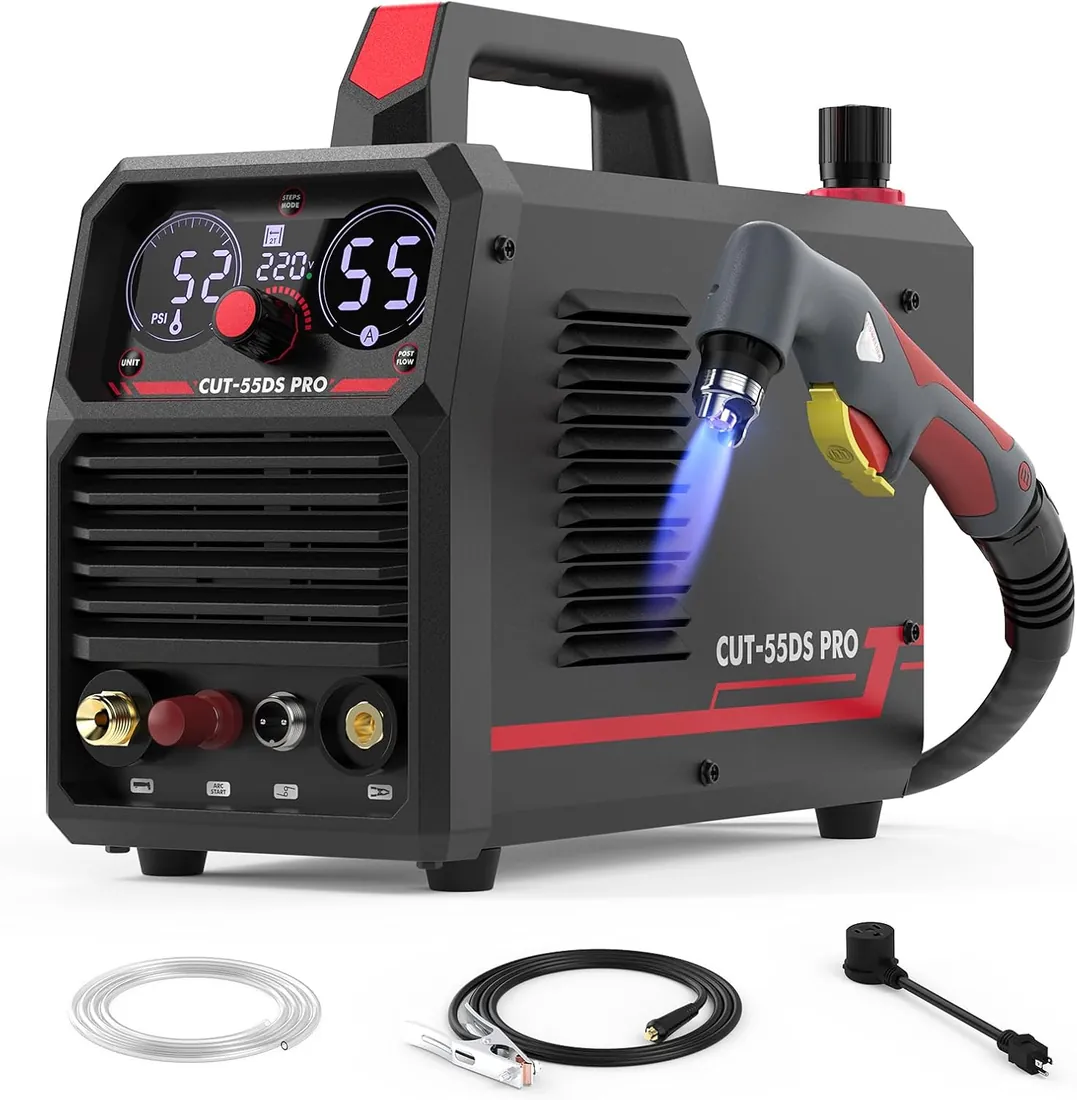
| YESWELDER CUT-55DS Plasma Cutter | Clean Cut: 5/16" | 55a | Not stated |
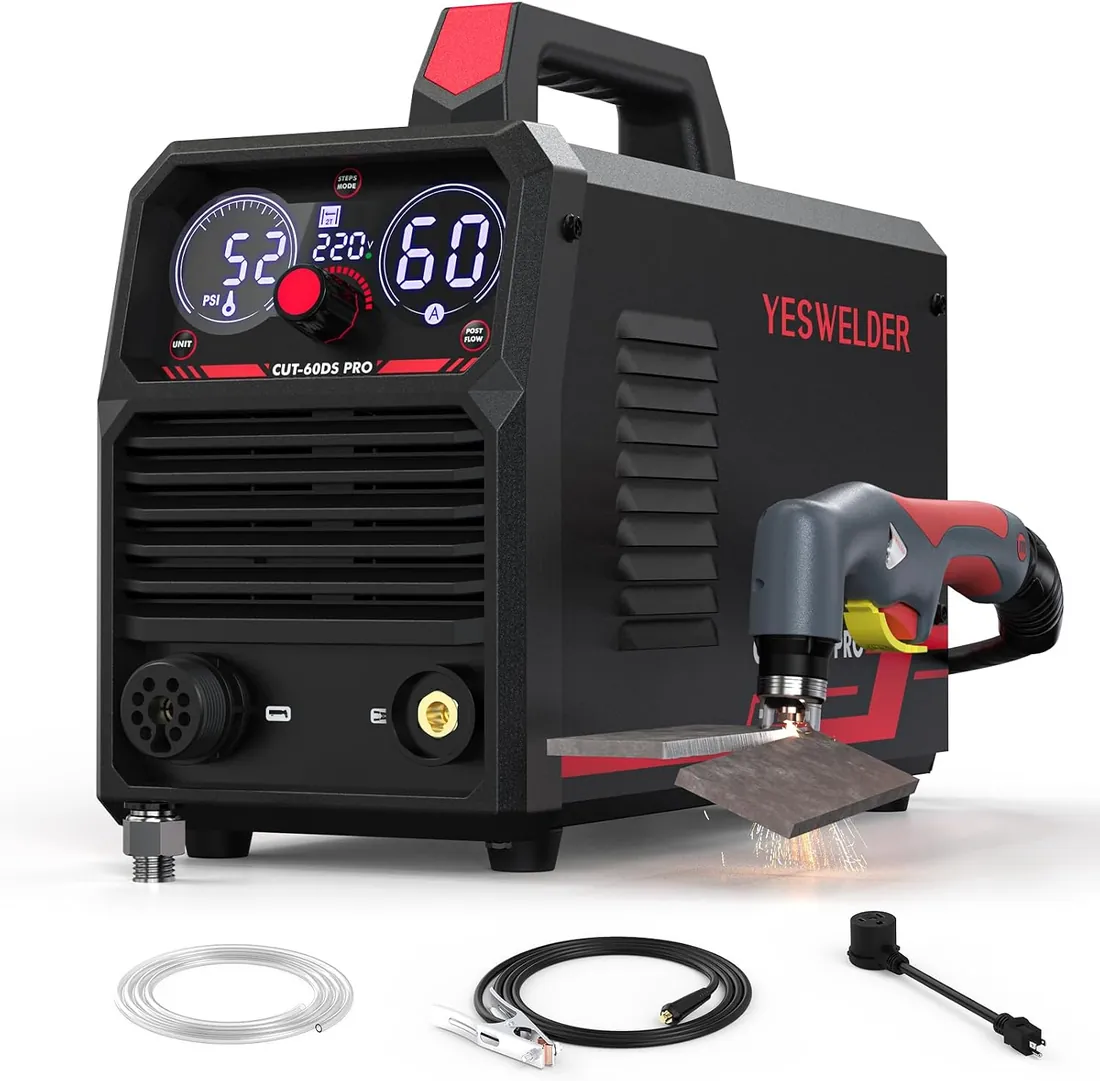
| YESWELDER CUT-65DS Plasma Cutter | Clean Cut: 5/16" | 60a | Not stated |
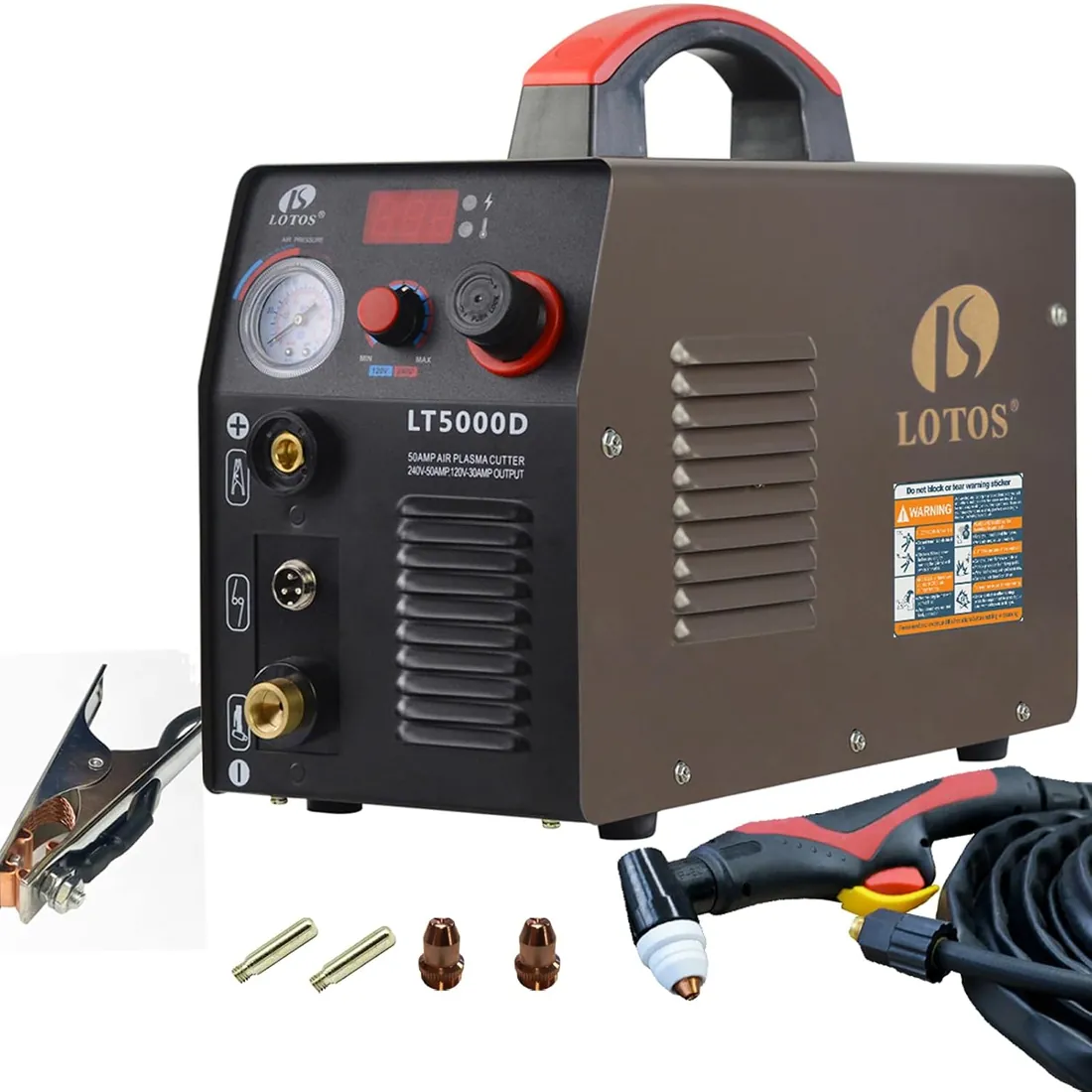
| LOTOS LT5000D Plasma Cutter | Clean Cut 3/4 inch | 50-amp | Not stated |
Air supply
Most plasma cutters need compressed air from a shop compressor at a stated flow and pressure, written as cubic feet per minute at a pressure in psi. The compressor has to deliver that flow continuously at that pressure, so compare the cutter's figure with the compressor's delivered CFM rating at the same pressure, not its tank size or peak figure.
Air must be clean and dry. Water and oil in the air shorten consumable life and spoil cut quality, so most makers recommend a filter or dryer at the cutter. A few cutters have a built-in compressor; they're portable but usually limited to thinner steel.
Pilot arc and other features
- Pilot arc: the torch strikes an arc inside the nozzle before touching the work, so it can cut through rust and paint and cut expanded metal. Cutters without it need contact or a scratch start.
- Input voltage: many cutters are dual-voltage, with lower cut capacity on 120 volts. The maker states both.
- Duty cycle: as with welders, a percentage of 10 minutes at a stated output. Long cuts at full output need a higher rating.
- Consumables: the nozzle and electrode wear; check their cost and availability for the model.
- CNC compatibility: some cutters have a machine torch option and a port for a CNC table.
Lens and safety
OSHA's minimum lens shade for light plasma cutting, under 300 amps, is shade 8, rising to 9 for 300 to 400 amps. Home-shop cutters run well under 300 amps. OSHA notes those values apply where the arc is clearly seen, and lighter filters may be used where the workpiece hides the arc.
A worked example
You'll mostly cut 1/4-inch plate and occasionally 1/2 inch. Look for a cutter whose rated or clean cut is at least 1/4 inch with margin, and whose severance figure reaches 1/2 inch, rather than one whose maximum is 1/4 inch. Check its air requirement against your compressor's delivered CFM at that pressure. Our amperage selector, set to plasma cutting, lists cutters by stated cut capacity.